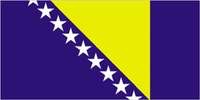
Bosnia and Herzegovina is a country on the Balkan Peninsula in southeastern Europe. Its countryside is home to medieval villages, rivers and lakes, plus the craggy Dinaric Alps.
Climate
Although situated close to the Mediterranean Sea, Bosnia and Herzegovina is largely cut off from its climatic influence by the Dinaric Alps. The weather in the Bosnia region resembles that of the southern Austrian highlands—generally mild, though apt to be bitterly cold in winter. In Banja Luka the coldest month is January, with an average temperature of about 32 °F (0 °C), and the warmest month is July, which averages about 72 °F (22 °C). During January and February Banja Luka receives the least amount of precipitation, and in May and June it experiences the heaviest rainfall.
People
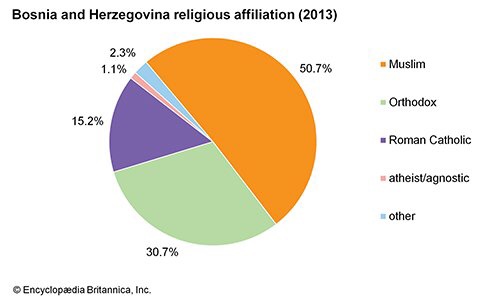
Ethnic groups and religions
Bosnia and Herzegovina is home to members of numerous ethnic groups. The three largest are the Bosniaks, the Serbs, and the Croats. Continuing efforts by the international community to promote the return of persons forcibly displaced during the Bosnian conflict (1992–95) to their original homes, as well as domestic political sensitivities, blocked the conduct of a census well into the 21st century. Nevertheless, it is estimated that Bosniaks constitute more than two-fifths, Serbs roughly one-third, and Croats less than one-fifth of the population.
 super single moms
I enjoy reading about different cultures. Thank you for sharing this information
LikeLike